
If you live with longstanding or chronic pain, you may have heard conflicting advice about exercise.
Should you push through?
Should you rest?
What if movement makes it worse?
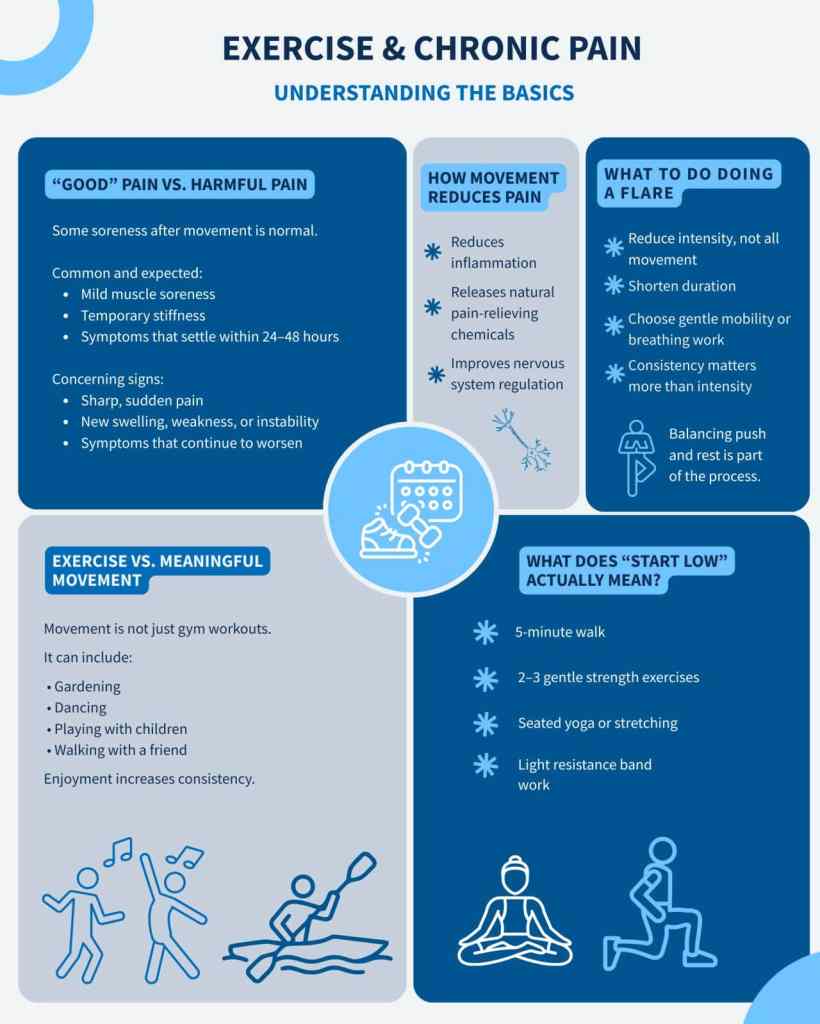
A helpful visual guide developed by Stanford University summarises something we talk about daily in clinic:
Movement, done the right way, is one of the most powerful tools for managing chronic pain.
At goPhysio in Chandler’s Ford, we support people across Eastleigh and Southampton who are navigating persistent back pain, knee pain, hip pain, fibromyalgia and long-standing injuries. Understanding how exercise works in chronic pain is often the turning point. Let’s break it down.
“Good” Pain vs Harmful Pain
One of the biggest fears we see is: “If it hurts, am I damaging myself?”
Not necessarily. Some soreness after movement is normal, especially if you’ve been inactive for a while.
Common and expected:
- Mild muscle soreness
- Temporary stiffness
- Symptoms that settle within 24–48 hours
This is often called “adaptation discomfort”, your body adjusting.
Concerning signs:
- Sharp, sudden pain
- New swelling, weakness or instability
- Symptoms that continue worsening
This is where professional assessment matters. If you’re unsure, getting clarity from a physiotherapist can prevent unnecessary fear and unnecessary rest.
How Movement Reduces Chronic Pain
Chronic pain is not just about tissues – it involves the nervous system. When you move safely and progressively, your body:
- Reduces inflammation
- Releases natural pain-relieving chemicals (endorphins)
- Improves nervous system regulation
- Builds confidence in movement
In persistent pain, the nervous system can become overprotective. Graded movement helps “turn the volume down.” This is why avoiding movement entirely can sometimes increase sensitivity over time.
What To Do During a Pain Flare
Flare-ups happen. They don’t mean you’ve failed. Instead of stopping completely:
- Reduce intensity, not all movement
- Shorten duration
- Choose gentle mobility or breathing work
- Focus on consistency over intensity
The key is balancing push and recovery.
Exercise vs Meaningful Movement
Exercise does not have to mean the gym. Movement can include:
- Gardening
- Walking with a friend
- Dancing
- Playing with grandchildren
- Gently moving in a pool
Enjoyment increases consistency. And consistency drives long-term change. This is especially relevant for adults over 45 who want to stay active but feel wary after repeated pain cycles.
What Does “Start Low” Actually Mean?
We often say “start low and go slow.” But what does that mean practically? Examples:
- A 5-minute walk
- 2-3 gentle strength exercises
- Seated yoga or stretching
- Light resistance band work
Small doses build tolerance. Your body adapts to what it experiences regularly. Progression is more important than intensity.
The Bigger Picture: Hope and Understanding
One of the most powerful shifts we see in clinic is when someone moves from:
“I’m broken” to “I understand what’s happening and I have a plan.”
Education reduces fear.
Movement restores confidence.
Structure builds resilience.
If you’ve been living with chronic pain in Chandler’s Ford, Eastleigh, or the surrounding Hampshire area, and feel stuck in a cycle of rest → flare → frustration, we can help you create a personalised plan.
You do not need to push through aggressively. And you do not need to avoid movement completely. The answer is usually somewhere in the middle – guided, graded, and consistent.
When To Seek Support
Consider booking an assessment if you:
- Have had pain for more than 3 months
- Feel unstable or fearful of movement
- Experience repeated flare-ups
- Aren’t sure what is “safe”
Our physiotherapists combine hands-on treatment, exercise prescription and education to help you move forward confidently.
Final Thought
Chronic pain does not mean permanent damage. Movement is medicine – when it’s the right dose. If you’d like support building a safe, structured exercise plan, get in touch with our team at goPhysio in Chandler’s Ford. Let’s help you move with clarity and confidence again.
