
Expert physio for runners of every level
Not being able to run because of an injury is genuinely frustrating, especially if you’re training for something specific. The good news is that most running injuries respond really well to the right assessment and treatment. We always start with a full assessment, so we can identify exactly what’s driving your injury and build the right plan to get you back on the road or trail. Here are some of the most common causes of running injuries we see:
- A sudden increase in mileage, pace or training intensity
- Poor running biomechanics or technique
- Inadequate or worn-out footwear
- Muscle imbalances or weakness, particularly around the hip and core
- Insufficient recovery between sessions
- Returning to running too quickly after a break or injury

Common running injuries we treat include runner’s knee, shin splints, Achilles tendinopathy, plantar fasciitis and ITB friction syndrome.
A running injury can feel like a major setback, but the great majority respond well to the right treatment and a clear return-to-running plan. Related pages: Knee Pain and Foot & Ankle Pain cover two of the most common areas affected by running. Clinically reviewed by Paul Baker MCSP, Co-founder & Clinical Director at goPhysio
Why Choose
goPhysio

I wanted to get over a calf strain as quickly as possible. goPhysio had appointments available when I needed them and gave great advice and a course of action to not only resolve the problem short term, but stop this re-occurring in the future.
Dave
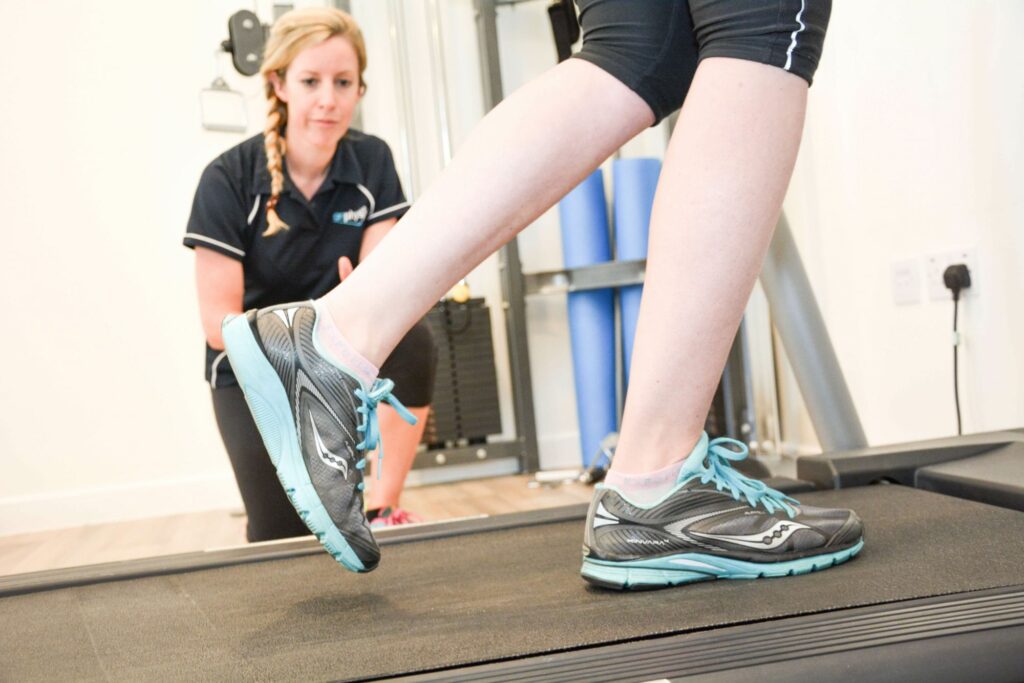
Can physiotherapy help my running injury?
Yes – our team of physiotherapists and specialist sports and rehabilitation therapists have experience across a wide range of running injuries, from a first-time niggle to recurring problems in more experienced runners. A number of our team have completed the Running Repairs course, one of the most highly regarded educational courses in the sector. Your treatment may include:
- A thorough assessment to identify the exact cause of your injury, not just where it hurts
- Access to our fully equipped on-site rehab gym to rebuild strength safely
- Shockwave therapy for stubborn, recurrent injuries such as Achilles or plantar fasciitis
- A functional, running-specific return-to-training plan
The goal throughout: get you back to running pain-free, and reduce the risk of the injury coming back.
Not sure what to do next?
- Ready to get started? → Book Your Running Injury Assessment
- Knee pain when you run? → Read About Knee Pain
- Foot or heel pain? → Read About Foot & Ankle Pain