
Clinical Pilates for Back Pain: Why Individualised Exercise Matters
Pilates has changed enormously over the past 25 years.
Once a relatively specialist form of movement used by dancers, performers and a small number of rehabilitation professionals, Pilates is now everywhere. You can find it in gyms, large studios, online subscriptions, leisure centres and boutique reformer studios. That growth is positive. Pilates can be an enjoyable way to become stronger, improve mobility, build confidence and move more regularly.
But it has also created some confusion, because Pilates no longer describes just one type of service.
A general Pilates class designed primarily for exercise and fitness is not the same as physiotherapy-led Clinical Pilates designed around an injury, recurring pain or health condition. Both have value. However, they are not always interchangeable.
What did the new research find?
A randomised controlled trial published online in September 2025 compared three different exercise approaches for adults with non-specific chronic lower back pain:
- DMA Clinical Pilates™
- ‘general’ Pilates
- general exercise
The study involved 52 adults who completed a six-week programme. Their progress was assessed before treatment, after six weeks and again at 12 weeks.
The Clinical Pilates group experienced greater improvements in pain, function and disability than the general Pilates and general exercise groups. They also demonstrated improvements in hamstring flexibility and several aspects of movement performance during a single-leg squat. Importantly, the Clinical Pilates exercises were selected according to each participant’s individual movement preference rather than giving everyone exactly the same standard programme.
This is where the study becomes particularly relevant. It was not simply the presence of a reformer, a particular exercise or the word “Pilates” that made the difference. The exercises were assessed, selected and tailored to the individual.
Clinical Pilates is more than a class
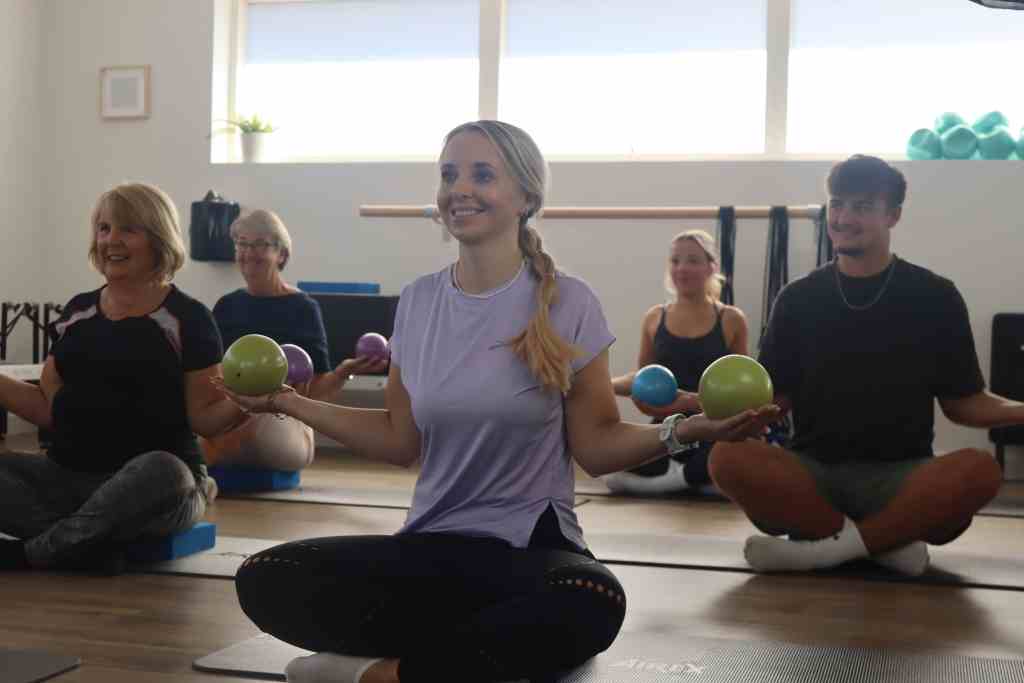
In a general Pilates class, the instructor will usually teach a planned sequence of exercises to the group. Exercises may be adapted to different ability levels, but the overall purpose is commonly fitness, conditioning and general wellbeing.
Clinical Pilates starts from a different place. It considers questions such as:
- What is causing or contributing to the person’s symptoms?
- Are there movements that ease or aggravate the problem?
- What previous injuries, operations or health conditions need to be considered?
- What does the person need to be able to do in everyday life?
- Which exercises should be introduced first?
- How should those exercises be adapted and progressed?
The exercises are only one part of the treatment. The clinical decisions behind them are what make the programme individual. Two people may both describe “lower back pain”, but that does not mean they need identical exercises. Their symptoms, movement patterns, confidence, lifestyle and goals may be completely different.
Does that mean ordinary Pilates is unsuitable?
Absolutely not. A well-taught general Pilates class can be an excellent choice for someone who wants to exercise, improve their general strength and mobility, or simply enjoys Pilates. The question is whether it is the right environment for that person at that particular time.
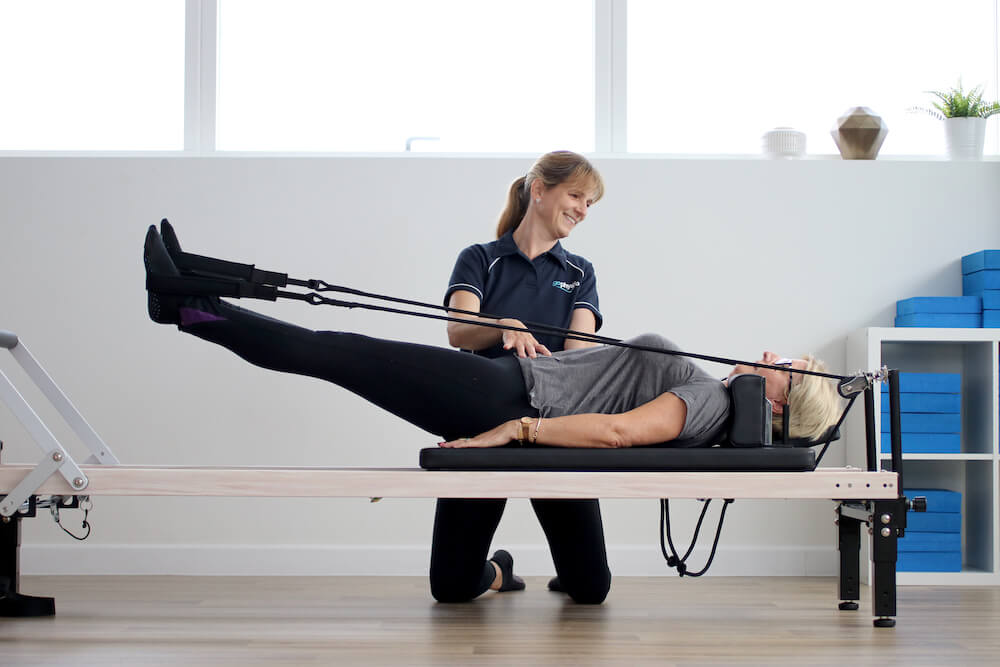
Someone managing persistent pain, recovering from an operation, returning after an injury or living with a more complex condition may benefit from starting in a clinically supervised environment.
A physiotherapist can assess whether Pilates is appropriate, identify anything requiring further investigation and adapt the exercises if symptoms change. This matters because the word “Pilates” alone does not tell you:
- who is delivering the session
- what clinical training they have
- whether you will be assessed beforehand
- whether your programme will be individualised
- how closely you will be supervised
- what will happen if an exercise increases your symptoms
Being more precise about these differences can help people choose the right support sooner, rather than spending weeks trying a class that was never designed around their needs.
What does the wider guidance say about back pain?
Exercise and continued movement are important parts of managing many episodes of lower back pain. NICE recommends considering exercise programmes for people with lower back pain or sciatica, while taking account of the person’s individual needs, preferences and capabilities. It also advises tailoring information and support to the person rather than relying on a one-size-fits-all approach.
The World Health Organisation similarly recommends exercise as part of an integrated, person-centred approach to chronic primary lower back pain. It emphasises that care may need to address the combination of physical, psychological and social factors affecting each person.
This does not mean there is one perfect exercise for every back. It means finding movement that is appropriate, achievable and meaningful for the individual and then helping them progress safely and confidently.
What the study does (and does not) tell us
This study provides encouraging evidence that an individualised Clinical Pilates approach can offer additional benefits for adults with non-specific chronic lower back pain. However, it was a relatively small study of 52 participants, involving one particular Clinical Pilates method and one specific condition. Participants were followed for 12 weeks, so further research involving more people and longer follow-up would be valuable.
It does not tell us that all general Pilates classes are ineffective. Nor does it prove that every service described as Clinical Pilates offers the same assessment, supervision or individualisation. What it does reinforce is something physiotherapists see every day:
The right exercise is not simply determined by the name of the exercise. It depends on why it has been selected, how it is performed and whether it is right for the person in front of us.

Clinical Pilates at goPhysio
At goPhysio in Chandler’s Ford, Clinical Pilates is physiotherapy-led and centred around the individual.
We look beyond the painful area to understand your symptoms, movement, previous injuries, health history and personal goals. Exercises can then be selected, adapted and progressed according to what you need—not simply according to what the rest of the class is doing.
Our aim is not only to help you complete Pilates exercises. It is to help you move with greater confidence, manage your symptoms and build the physical capacity you need for everyday life.
Because Pilates can be the method we use – but it is the assessment, individual programme and clinical reasoning that turn movement into rehabilitation.
Not sure whether a general Pilates class or Clinical Pilates is right for you? Speak to the goPhysio team about the most appropriate place to begin.
This article is for general information and should not replace an individual assessment or medical advice. Seek urgent medical help for new or worsening symptoms such as loss of bladder or bowel control, numbness around the saddle area, rapidly progressing weakness, significant trauma or unexplained systemic illness.