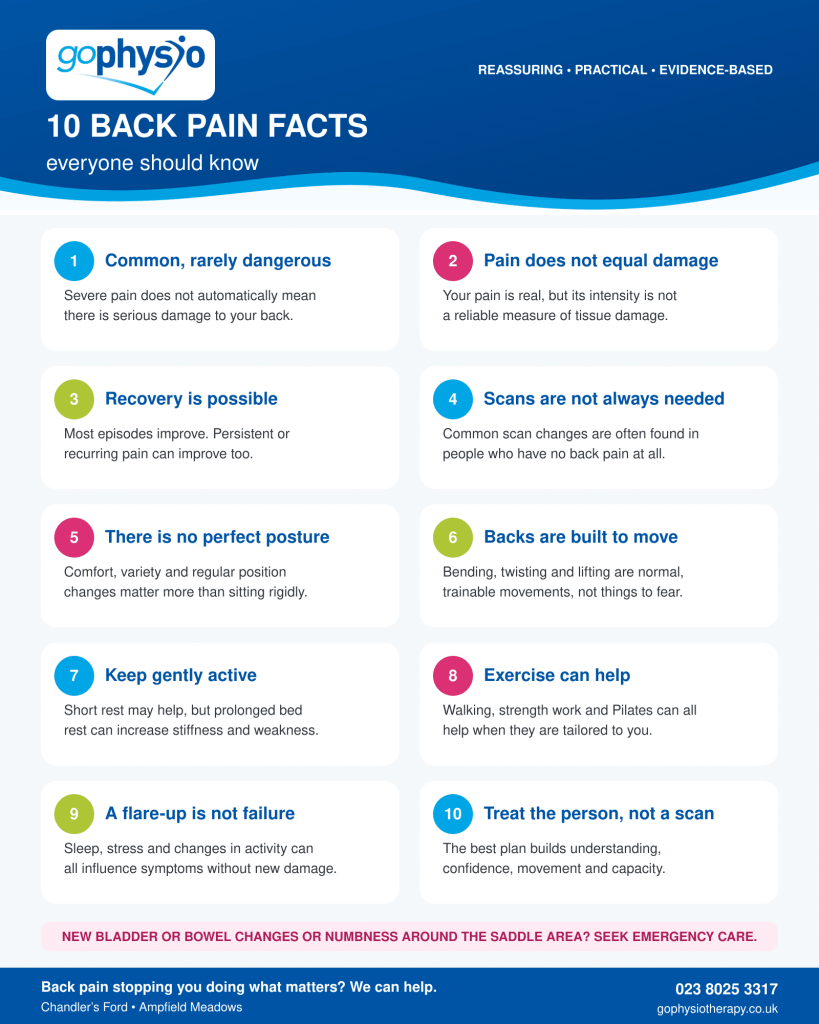
Back pain can be painful, frustrating and sometimes frightening. However, the amount of pain you feel does not always reflect how much physical damage has occurred, and most back pain is not caused by a serious medical condition. Understanding what back pain means, and what it does not mean, can help you feel more confident about moving, exercising and returning to normal life. At goPhysio, we help people from Chandler’s Ford, Eastleigh, Southampton and Winchester understand their symptoms and build a practical, individual recovery plan.
Back pain: the short answer
If you only remember four things, remember these:
- Back pain is common and is rarely caused by something dangerous.
- Pain does not necessarily mean that your back is damaged.
- Staying gently active is usually more helpful than prolonged rest.
- Persistent or recurring back pain can still improve with the right support.
Here are our ten evidence-based back pain facts.
1. Back pain is common and rarely dangerous
Back pain can feel severe without being caused by a serious medical condition. Most episodes are described as “non-specific back pain”. This means the pain cannot be traced to one damaged joint, muscle, disc or other structure. Instead, it may be influenced by a combination of physical loading, sensitivity, activity levels, sleep, general health and stress. A thorough assessment is still important when symptoms are severe, unusual, worsening or affecting your ability to manage everyday life.
2. The amount of pain does not always equal the amount of damage
Pain is your body’s protection system. It is influenced by signals from the body, but also by your previous experiences, sleep, stress levels, health and how concerned you feel about the symptoms. This does not mean the pain is imaginary. The pain is completely real, but it is not a reliable measurement of tissue damage. A painful movement may be sensitive rather than harmful. With appropriate guidance, you can often gradually restore movement without causing damage to your back.
3. Most episodes of back pain improve
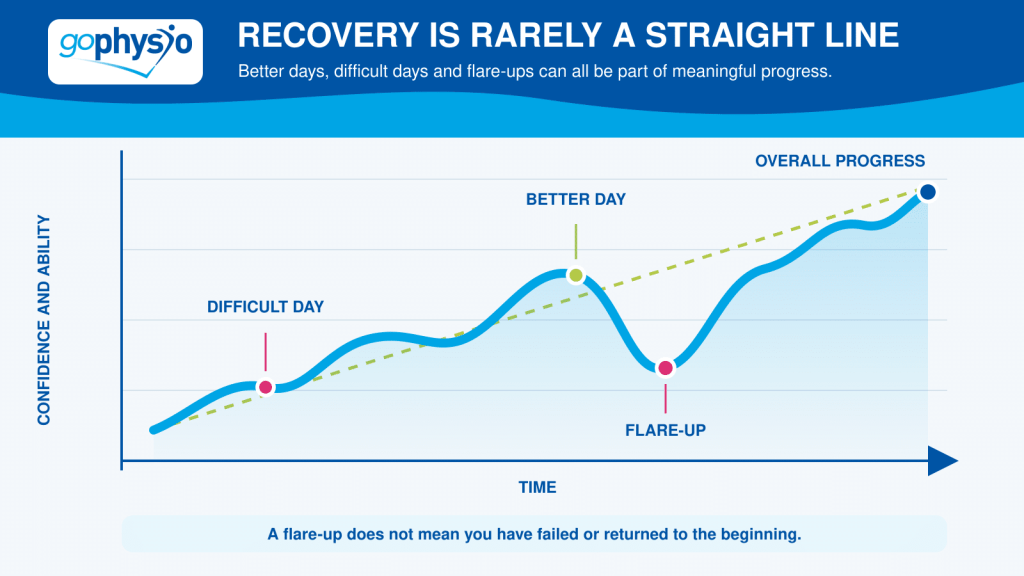
It is understandable to worry that back pain will keep getting worse, particularly if you have experienced more than one episode. However, most episodes improve. Even when pain has lasted for several months or keeps returning, meaningful progress is still possible. Recovery is not always a perfectly straight line. You may have better days, more difficult days and occasional flare-ups. These do not mean that you have failed or returned to the beginning.
4. A scan is not always needed
Many people understandably think an X-ray or MRI scan will identify exactly what is causing their pain. However, scans often show normal age-related changes that are also found in people who have no back pain. Findings such as disc degeneration, disc bulges and joint changes do not automatically explain your symptoms or mean that your back is damaged. For most uncomplicated back pain, a detailed conversation and physical assessment provide more useful information. NICE advises that imaging should not routinely be offered in a non-specialist setting and should generally be considered only when the result is likely to change treatment.
5. There is no single “perfect” posture
Slouching is often blamed for back pain, but there is no one ideal posture that everyone must maintain. Sitting or standing in the same position for a long time may become uncomfortable. This does not necessarily mean the position is damaging your back. Instead of constantly trying to hold yourself perfectly straight, aim to:
- Change position regularly
- Move throughout the day
- Use a comfortable workstation
- Take short breaks from prolonged sitting
- Gradually build your tolerance to the positions your work and hobbies require
Your best posture is often your next posture!
6. Your back is designed to bend and lift
The spine is a strong and adaptable structure. Bending, twisting and lifting are normal human movements. There may be times when these activities feel uncomfortable, particularly during a flare-up or after a sudden increase in physical demand. This does not mean you must avoid them permanently. Rather than fearing particular movements, it is usually more helpful to rebuild your confidence and capacity gradually. This might begin with lighter loads, a smaller range of movement or fewer repetitions before progressing. There is no single lifting technique that is perfect for every person, object or situation.
7. Prolonged bed rest is rarely the answer
When your back is painful, resting for a short period may feel necessary. However, spending long periods in bed or completely avoiding movement can increase stiffness, reduce strength and make it harder to return to normal activities. Try to continue with manageable daily movement, even if you need to temporarily adapt how much you do. This could include:
- Short walks
- Regular changes of position
- Gentle mobility exercises
- Breaking household tasks into smaller sections
- Gradually returning to work, exercise and hobbies
You do not need to wait until you are completely pain-free before beginning to move.
8. Exercise is one of the best ways to support recovery
There is no single “best” exercise for every person with back pain. Walking, strength training, Pilates, mobility exercises and general cardiovascular activity can all be helpful. The most suitable choice depends on your symptoms, confidence, goals, health and what you are likely to continue doing. Exercise may initially feel slightly uncomfortable, particularly if you have been avoiding movement. Some discomfort does not automatically mean you are causing harm. A physiotherapist can help you decide what level of discomfort is acceptable and how to progress safely. The aim is not simply to make your back stronger. It is to improve your confidence, movement, overall physical capacity and ability to do the things that matter to you.
9. Flare-ups do not necessarily mean a new injury
Back pain can sometimes increase without a new injury or obvious physical damage. A flare-up may follow:
- Doing more activity than your body is currently used to
- Poor sleep
- Illness or fatigue
- Emotional stress
- Long periods of inactivity
- An unfamiliar or demanding task
- A combination of several factors
During a flare-up, temporarily adjusting your activity can help. The goal is usually to keep moving within manageable limits and then gradually return to your normal routine. Understanding your individual triggers can make future flare-ups feel less alarming and easier to manage.
10. Persistent back pain can still improve
Back pain lasting longer than three months is often called persistent or chronic back pain. “Chronic” describes how long the pain has been present – it does not mean that your back is permanently damaged or that improvement is impossible. Persistent pain often responds best to a whole-person approach. This may include:
- Understanding your symptoms
- Gradually increasing activity
- Improving strength and physical capacity
- Addressing worries about movement
- Supporting sleep and recovery
- Managing workload and stress
- Using hands-on treatment where appropriate to help you move and exercise
There is rarely one quick fix. A personalised plan, followed consistently, is more useful than repeatedly searching for one structure that needs to be “put back into place”.
When should you seek urgent medical help?
Most back pain is not dangerous, but some symptoms require urgent assessment. Attend A&E urgently if back or leg pain is accompanied by new:
- Difficulty controlling or emptying your bladder or bowels
- Numbness or altered sensation around your genitals, bottom or inner thighs
- Significant weakness or altered sensation in both legs
- Loss of sexual sensation or function
- Rapidly worsening neurological symptoms
You should also seek prompt medical advice if your pain follows significant trauma or is accompanied by fever, unexplained weight loss, a history of cancer or feeling generally unwell.
How can physiotherapy help with back pain?
A physiotherapy assessment can help establish whether your symptoms are consistent with a common back pain presentation or whether further medical assessment may be required. At goPhysio, we look beyond the painful area. Your assessment may consider:
- How and when the problem started
- Movements and activities that affect it
- Your work, sport and everyday demands
- Strength, mobility and physical capacity
- Sleep, recovery and general health
- Your concerns and previous experiences
- What you want to return to doing
We can then develop a clear plan combining education, appropriate hands-on treatment, exercise and progressive rehabilitation.
Frequently asked questions about back pain
Is walking good for lower back pain? Walking is often a useful way to remain active during an episode of back pain. Start with a manageable distance and increase it gradually. If one long walk aggravates your symptoms, try several shorter walks instead.
Should I stretch a painful back? Gentle stretching can feel helpful for some people, but stretching is not essential for everyone. Your exercises should reflect your particular symptoms and needs rather than following a generic routine.
Do I need an MRI scan for back pain? Most people with uncomplicated back pain do not need an MRI scan. Imaging may be appropriate if a serious condition is suspected or if the result is likely to change your treatment.
Should I avoid exercise until the pain has gone? Usually not. Continuing with suitable movement and gradually returning to exercise can support recovery. You may need to modify the type, intensity or duration temporarily.
Can physiotherapy help long-term back pain? Yes. Physiotherapy can help you understand the different factors contributing to your pain, rebuild strength and confidence, and develop a sustainable plan for managing everyday activity and flare-ups.
Worried about your back pain?
If back pain is stopping you from working, sleeping, exercising or enjoying everyday life, you do not have to work out the next step alone. The goPhysio team provides physiotherapy and rehabilitation for back pain and sciatica at our Chandler’s Ford clinic, with appointments often available within 24 hours.
Find out more about our back pain service or book an appointment.
Written by Paul Baker MCSP, Co-founder and Clinical Director at goPhysio Reviewed: September 2026
This article provides general information and is not a substitute for an individual medical assessment.
Sources and further reading
- O’Sullivan PB et al. Back to basics: 10 facts every person should know about back pain. British Journal of Sports Medicine.
- NICE. Low back pain and sciatica in over 16s: assessment and management.