If you’ve ever struggled with a shoulder issue like a frozen shoulder or a rotator cuff injury, these thoughts may be familiar…..
“The nights are the worst.” or “I’d do anything for a good night’s sleep.”
This is so common. You’re not imagining it, shoulder pain really does tend to feel worse at night. But why does this happen? There’s a few reasons.
- Fewer Distractions, More Awareness During the day, you’re bus. You’ll likely be working, chatting, moving, watching TV, scrolling your phone. All of these distractions can pull your attention away from pain. At night, when things are quiet and still, discomfort has more space to come to the forefront of your mind.
- Sleeping Position & Shoulder Pressure When you lie down, the shoulder joint is loaded differently than when you’re upright as you naturally have different pressures going through the joint. This change in position can put extra pressure on the sensitive structures in your shoulder like the joint capsule or bursa, making pain more noticeable.
- Inflammation & Your Body Clock Many shoulder problems involve a background level of inflammation. What’s interesting is that inflammation doesn’t stay constant, it follows your body’s natural 24-hour rhythm (your circadian rhythm). For many people, inflammatory activity tends to ramp up overnight, which can increase sensitivity and pain.
- The Role of Melatonin (Your Sleep Hormone) You’ve probably heard of melatonin. It’s the hormone that helps regulate sleep. Levels rise in the evening to help you drift off to sleep and drop again in the morning to help you wake up. But melatonin does more than manage sleep. Research has found that it also affects pain and inflammation pathways. In people with shoulder problems, there seem to be more melatonin “receptors” in the shoulder tissues. When activated, these can make nerve endings more sensitive and encourage inflammation. In simple terms: more melatonin at night can sometimes mean more pain signals being triggered in the shoulder.
So, in summary…….Why Is Shoulder Pain Worse at Night?
It’s likely a combination of:
- Mechanical factors (how you’re lying)
- Inflammation cycles (linked to your body clock)
- Hormonal influences (like melatonin)
All of these can come together to make night-time a tricky period for shoulder pain.
What Can Help?
Most importantly, understanding all of these factors means we can take a smarter approach to managing night pain:
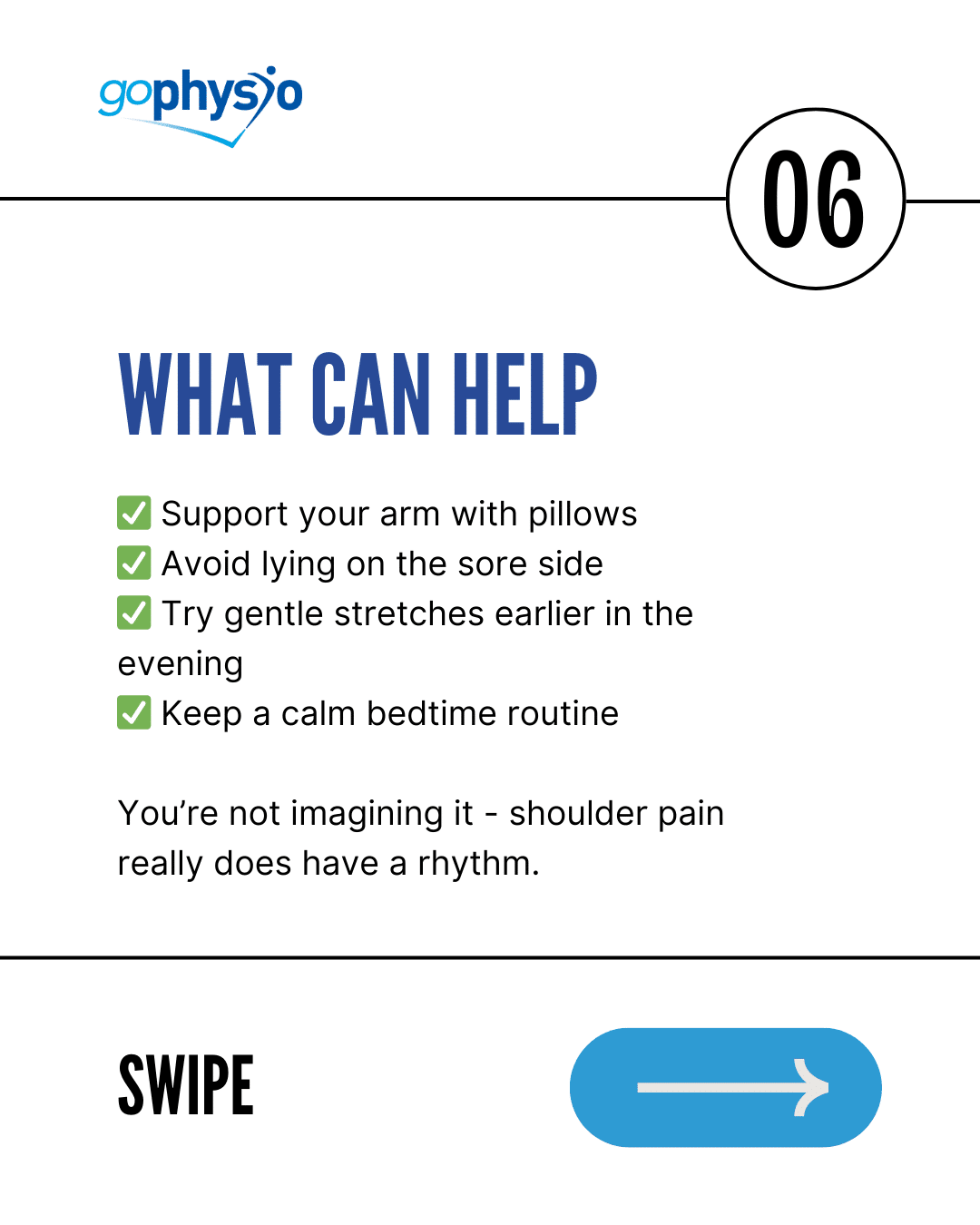
- Sleep position: Using pillows for support or trying to avoid lying on the painful side.
- Sleep hygiene: Keeping a regular routine and winding down properly before bed, avoiding blue light, caffeine etc.
- Treatment timing: You might find that exercises, stretches or pain relief strategies work best if timed earlier in the evening.
- Reassurance: Simply knowing that pain has a rhythm can help reduce your frustration and anxiety around the pain.
So, what’s the summary? Night-time shoulder pain isn’t just in your head, it’s shaped by how your body works. With the right strategies, you can take back some control and hopefully improve your sleep; which is certainly key when you’re suffering with pain.
Ready to take control of your shoulder pain? Get in touch with us today to discuss the best treatment options for you and start sleeping easier again.