
Osgood-Schlatter in Children: Symptoms, Treatment and Returning to Sport
Has your child started complaining of pain just below their kneecap, particularly when running, jumping or playing sport? They may have a common growth-related knee condition called Osgood-Schlatter disease.
Despite its name, Osgood-Schlatter is not really a disease. It is an irritation of a developing area of bone at the top of the shin, where the tendon from the kneecap attaches. It is particularly common in active children and teenagers who are experiencing a growth spurt.
The good news is that Osgood-Schlatter is not usually a serious condition. With the right advice, changes to activity and an appropriate strengthening programme, most young people can continue being active while their symptoms are managed.
What is Osgood-Schlatter disease?
Osgood-Schlatter affects the tibial tuberosity, which is the small bony area at the top of the shin, just below the kneecap.
During childhood and adolescence, this area contains a growth plate that is still developing. The strong quadriceps muscles at the front of the thigh connect to this area through the kneecap and patellar tendon.
Activities such as running, jumping, kicking, squatting and rapidly changing direction repeatedly pull on this attachment point. During a growth spurt, the area can temporarily become less tolerant of these forces, causing pain, tenderness and sometimes swelling.
The medical term for this is traction apophysitis of the tibial tuberosity.
Who is most likely to develop Osgood-Schlatter?
Osgood-Schlatter commonly affects children between approximately 9 and 15 years old, although the exact age varies depending on when they experience their growth spurts. It is particularly common among children who regularly participate in activities involving:
- Running and sprinting
- Jumping and landing
- Hopping
- Kicking
- Squatting
- Sudden changes of direction
Football, rugby, netball, basketball, hockey, gymnastics, athletics and dance can all place repeated demands on the area.
Around one in ten active adolescents may experience Osgood-Schlatter symptoms. The risk can be greater when a child suddenly increases the amount or intensity of sport they are doing, particularly after a holiday, illness or quieter period.
What are the symptoms of Osgood-Schlatter?
The most common symptom is pain at the front of the knee, just below the kneecap. Other signs may include:
- Tenderness over the top of the shin bone
- Pain during or after running and jumping
- Pain when squatting, kneeling or using stairs
- Pain when kicking a ball
- Local swelling
- A hard or prominent bony bump below the knee
- Symptoms that improve with rest
- Tightness around the thigh or hamstring muscles
- Pain in one or both knees
The bony bump can become more noticeable over time. It may remain after the child has stopped growing, but it usually becomes painless and does not affect normal knee function.
Does my child need an X-ray?
Osgood-Schlatter can usually be diagnosed by listening to the child’s symptoms and examining their knee, strength, movement and sporting activity. An X-ray or scan is not normally required when the symptoms and examination are typical. Further investigation may be considered if the symptoms are unusual, followed a significant injury, are not improving as expected or suggest that another condition could be causing the knee pain.
Can children continue playing sport with Osgood-Schlatter?
A child with Osgood-Schlatter does not always need to stop all sport. The aim is usually to find a level of activity their knee can tolerate, rather than automatically prescribing complete rest. Remaining active can help maintain fitness, confidence and muscle strength.
However, the amount and intensity of sport may need to be temporarily reduced. A useful pain-monitoring guide is that activity should:
- Cause no more than mild discomfort
- Not cause the child to limp or change how they run
- Settle relatively soon after the activity
- Not result in worse pain later that day or the following morning
If pain is increasing, lasting for longer or affecting normal movement, the activity level is probably too high at that time. Swimming, gentle cycling or other lower-impact activities may help a child maintain their fitness while temporarily reducing running and jumping.
How is Osgood-Schlatter treated?
Treatment should be tailored to the child, their symptoms and the demands of their sport. It may include the following.
1. Adjusting activity
The first step is often to reduce the activities that are aggravating the knee. This does not necessarily mean stopping everything. It might mean:
- Attending fewer training sessions temporarily
- Reducing running or jumping drills
- Taking a break from matches while continuing suitable training
- Avoiding deep squats or repeated kneeling
- Replacing some high-impact activity with swimming or cycling
- Allowing more recovery between sessions
A suitably trained physiotherapist or Sports & Rehab Therapist can help identify which activities need to change and which ones are safe to continue.
2. Gradually rebuilding strength
Pain can lead children to use the affected leg less, which may reduce strength and make a return to full sport more difficult. A rehabilitation programme may focus on the:
- Quadriceps
- Hamstrings
- Calf muscles
- Hip and gluteal muscles
- Trunk and core
- Balance and control of the whole leg
Strengthening should begin at a comfortable level and progress as the child’s symptoms and capacity improve. Exercises should be selected for the individual child. Generic online exercises are not always appropriate, particularly if the diagnosis has not been confirmed or an exercise increases pain.
3. Improving movement and sporting technique
How a child runs, lands, squats and changes direction can influence the demands placed on their knee. Rehabilitation may include learning how to:
- Bend effectively through the hips
- Control the knee during landing
- Improve single-leg balance
- Absorb force during jumping
- Build confidence with sport-specific movements
4. Managing short-term discomfort
An ice pack wrapped in a towel may help settle soreness after activity. It should not be placed directly against the skin. Taping or a suitable knee support can sometimes make activity more comfortable, although these should support rehabilitation rather than replace it.
Parents should speak to a pharmacist, GP or other qualified healthcare professional before giving medication to manage a child’s pain. Pain relief should not be used simply to mask symptoms so that a child can continue pushing through an unsuitable level of activity.
5. Supporting recovery
A child’s ability to tolerate sport can temporarily reduce during periods of rapid growth, poor sleep, illness, stress or inadequate nutrition. Helpful recovery habits include:
- Regular meals and adequate energy intake
- Sufficient protein and a varied, balanced diet
- Good hydration
- Age-appropriate sleep
- Rest and easier training days
- Avoiding sudden increases in sporting activity
Parents concerned about their child’s nutrition or vitamin D intake should seek advice from an appropriate healthcare professional rather than starting high-dose supplements without guidance.
What causes Osgood-Schlatter symptoms to flare up?
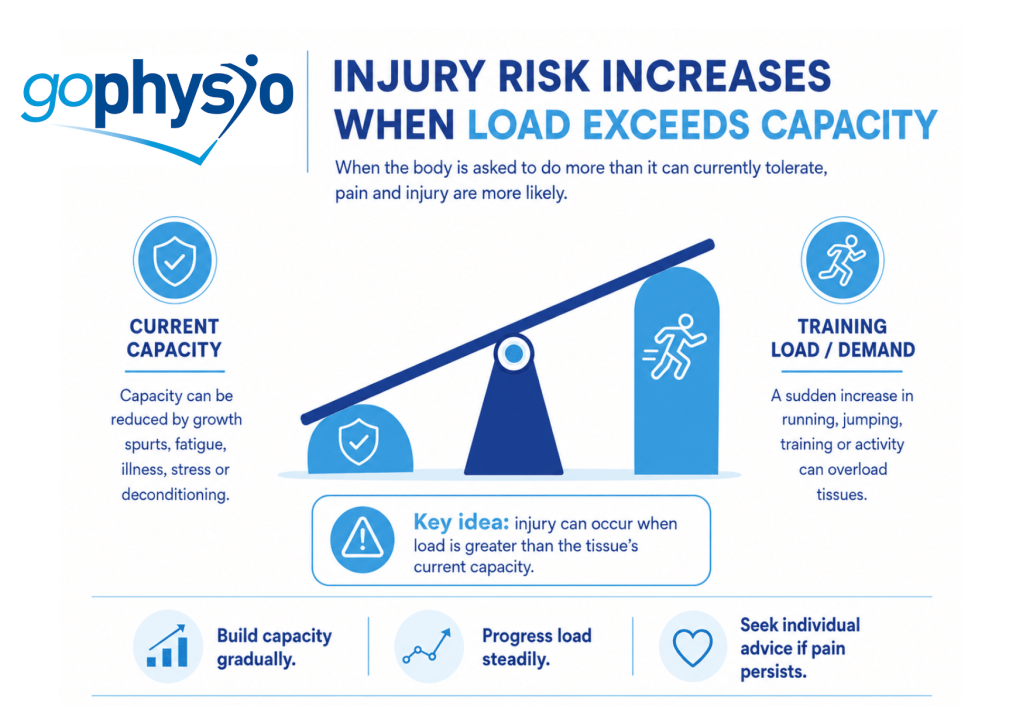
Symptoms often flare when the demands placed on the knee increase faster than the body has had time to adapt. Common examples include:
- Returning to full training immediately after a school holiday
- Starting a new sports season
- Adding extra teams or clubs
- Increasing training days or match play
- A sudden growth spurt
- Returning too quickly after illness or injury
- Participating in one sport at a high level throughout the year
- Inadequate sleep and recovery
Keeping a simple record of weekly sport, PE lessons, matches and other physical activity can help families identify sudden increases.
How does a child return to sport?
Returning to sport should be gradual and based on what the child can do, rather than simply how many weeks have passed. A typical progression may move through:
- Comfortable walking and everyday activities
- Cycling or swimming
- Controlled strengthening exercises
- Hopping and jumping
- Light running
- Faster running and sprinting
- Changes of direction
- Sport-specific training
- Full team training
- Matches or competition
If symptoms flare, the child can temporarily return to an easier stage before building up again. Before returning fully, they should ideally be able to run, jump, land and change direction with good control and without limping or experiencing a significant increase in symptoms afterwards.

How long does Osgood-Schlatter last?
Osgood-Schlatter symptoms can fluctuate. Some children improve within weeks or months, while others experience intermittent symptoms during growth for longer. Symptoms usually settle as the growth plate matures, although waiting for a child to “grow out of it” without managing strength and activity can result in unnecessary discomfort and time away from sport. Early advice can help the child remain active, understand their symptoms and return to full sport with more confidence.
When should we seek professional advice?
Arrange an assessment if:
- You are unsure what is causing the knee pain
- The child has started limping
- Pain is affecting school, sleep or everyday activities
- Symptoms are becoming progressively worse
- The knee is not improving after reducing aggravating activity
- The child is repeatedly missing sport
- Pain returns whenever training increases
- You need guidance about exercises or returning to sport
Seek prompt medical advice if the child has a hot, very swollen knee, fever, is generally unwell, cannot put weight through the leg, has severe pain after an injury or experiences persistent night pain.
Not all pain at the front of a child’s knee is caused by Osgood-Schlatter, so an accurate assessment is important.
How can physiotherapy help?
At goPhysio, our physiotherapists and sports therapists assess more than just the painful area. We look at the child’s growth, strength, flexibility, movement, training schedule and the specific demands of their sport. A personalised plan may include:
- Confirming the likely cause of the knee pain
- Advice about school PE, training and matches
- A tailored strengthening programme
- Running, landing and movement assessment
- Guidance for parents, coaches and teachers
- A staged return-to-sport plan
- Strategies to reduce future flare-ups
Our aim is not simply to tell children to stop doing what they enjoy. We help them understand their injury, remain involved where possible and safely build the capacity they need to return to sport.
Concerned about your child’s knee pain?
If your child has pain below the kneecap when running, jumping or playing sport, an early assessment can provide reassurance and a clear plan.
goPhysio provides physiotherapy and sports injury rehabilitation for children and teenagers from Chandler’s Ford, Eastleigh, Southampton, Winchester and the surrounding Hampshire area.
Book a Children and Teen Sports Injury Assessment with goPhysio. No GP referral is required.

Frequently asked questions about Osgood-Schlatter
Is Osgood-Schlatter a disease?
No. Despite its traditional name, it is a growth-related irritation where the patellar tendon attaches to a developing area of the shin bone.
Is Osgood-Schlatter dangerous?
It is not usually dangerous and does not normally damage the knee joint. However, other causes of childhood knee pain need to be considered if the symptoms are unusual or severe.
Should a child rest completely?
Not necessarily. Many children can continue an adjusted level of activity, provided it does not cause a limp, altered movement or a significant increase in pain afterwards.
Can Osgood-Schlatter affect both knees?
Yes. Some children develop symptoms in one knee, while others experience pain in both.
Will the lump below the knee disappear?
The tenderness and swelling usually settle, but a painless bony prominence may remain after growth has finished.
Can physiotherapy help Osgood-Schlatter?
Yes. Physiotherapy can help manage sporting load, improve strength and movement, and guide the child through a gradual return to their chosen activities.
Can my child play football with Osgood-Schlatter?
They may be able to continue some football if discomfort remains mild and they do not limp or experience worsening pain afterwards. Training volume, sprinting, kicking and match play may need to be adjusted temporarily.
Does Osgood-Schlatter require surgery?
Surgery is very rarely required. Most children are managed with activity modification, rehabilitation and time.